- Home
- Salt Air & Coastal Corrosion
Salt air and coastal corrosion
The same breeze that makes the Treasure Coast worth living on quietly eats air conditioners. Trade Winds Air matches coastal homeowners with licensed, insured contractors who understand salt air, because near the water, picking the right pro is half the battle.
- Coastal Smart Matching
- Licensed Contractors Only
- No Obligation Estimates
- Free For Homeowners
Why coastal systems fail differently
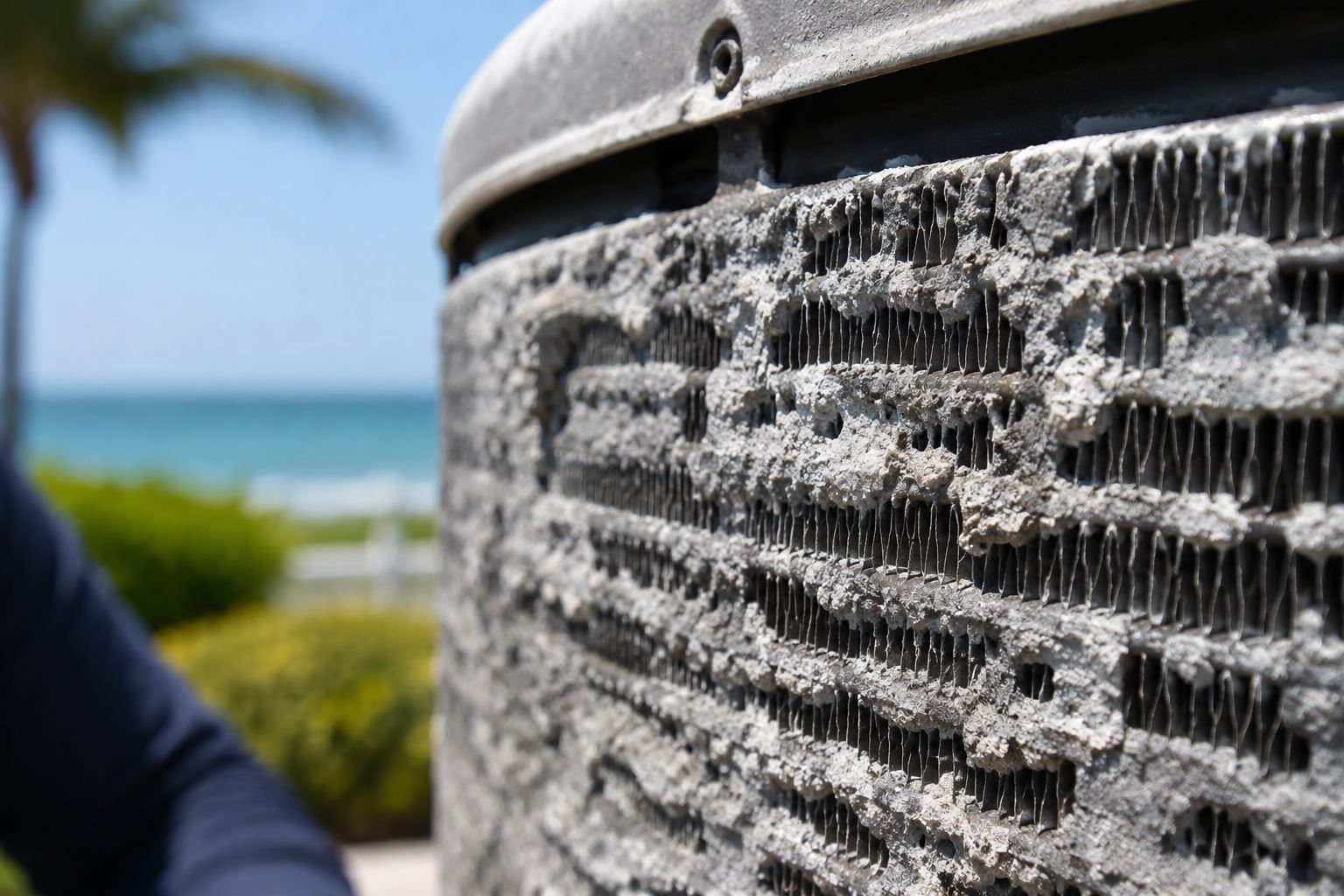
Salt is conductive, corrosive, and airborne. When it settles on an outdoor condenser it attacks the thin aluminum fins and copper tubing where heat exchange happens, and once those coils pit and flake, the system loses capacity it never gets back. Cabinets rust from the fasteners outward, electrical contacts degrade, and refrigerant leaks open up years before they would inland. The practical result is blunt: equipment near salt water can age out in seven to twelve years while the same unit a few miles inland cruises past fifteen.
This is not a reason to panic. It is a reason to treat coastal AC ownership as its own discipline, with protection, rinsing, and placement decisions that inland homeowners never have to think about.
What salt air damage looks like
Walk out to your condenser and look. These are the signals licensed pros check for first on coastal calls.
Salt residue actively corroding the fins. The earlier a pro cleans and treats it, the more capacity survives.
Fins that crumble or shed gray flakes have already lost material. A licensed pro can judge how much life remains.
Cabinet pitting starts at screws and seams. Cosmetic at first, then structural, then the panels stop protecting anything.
Longer run times and warmer air within a half mile of salt water often trace back to a corroded, choked condenser coil.
Oxidizing copper at joints and service valves is where coastal refrigerant leaks love to start.
A five year old unit acting like a twelve year old one is the signature of unprotected coastal exposure.
Near the water? Get a coastal smart pro on it.
Free matching with licensed local contractors. (772) 266-5463.
Where the Treasure Coast feels it worst
Exposure is about distance and wind. Jensen Beach takes it hardest, squeezed between the ocean and the wide Indian River Lagoon with salt on both sides. Waterfront Stuart along the St. Lucie River sees river salt that homeowners often underestimate. In Jupiter, the dividing line is roughly US-1: east of it, condensers live in ocean air every day. And Hobe Sound properties near the Intracoastal get steady salt exposure that the neighborhoods west of Federal Highway largely escape. If your home sits in any of these zones, your AC is living a harder life than the identical unit in western Port St. Lucie or Palm City.
Why coastal experience matters when choosing a contractor
Any licensed contractor can replace a capacitor. Coastal work is different because the judgment calls are different: whether a corroded coil can be saved or is past the point of cleaning, whether a replacement should carry factory coated coils, where a new condenser should be placed to shelter it from the prevailing sea breeze, and what a realistic rinse and maintenance rhythm looks like for your exact distance from the water. Pros who work the barrier islands and river fronts every week make those calls well. That is the kind of experience we weigh when matching coastal requests.
Questions worth asking the pro about coastal protection
When the licensed contractor is standing at your condenser, these questions earn their keep:
- Would factory coated coils make sense for my next unit at this distance from the water?
- How often should this condenser get a fresh water rinse, and can that be part of a maintenance schedule?
- Is my condenser placed well, or would relocating or shielding it reduce salt exposure?
- Can the current coil be cleaned and treated, or is corrosion already into the tubing?
- What corrosion resistant hardware and treatments do you use on coastal installs?
A pro with real coastal mileage answers those without blinking. Call (772) 266-5463 or send the request form, and we will match you with one.
FAQ
How close to the water does salt air damage actually matter?
The first half mile from salt water is the brutal zone, but licensed contractors on the Treasure Coast see accelerated corrosion a mile or two inland, especially east of US-1 and along the Intracoastal and the St. Lucie River. Onshore breezes carry salt farther than most homeowners expect.
Does Trade Winds Air apply coil coatings or do rinse-downs?
No. Trade Winds Air is a referral service. Coatings, rinse-downs, and all other protective measures are performed by independent, licensed, and insured Florida contractors. What we do is match you with pros who work on coastal systems all the time.
Can an existing system be protected, or only new ones?
A licensed pro can often add protection to an existing unit, such as cleaning and treating coils and setting up a regular rinse routine. Factory coated coils are a new equipment decision, which is why coastal experience matters most at replacement time.
Is coastal protection worth the extra cost?
That depends on your distance from the water, and it is a question to put to the licensed contractor with the numbers in front of you. Estimates are no obligation, so you can hear the coastal case and decide for yourself.
The coast is hard on ACs. We know who handles it.
Get matched with a licensed coastal experienced pro today.