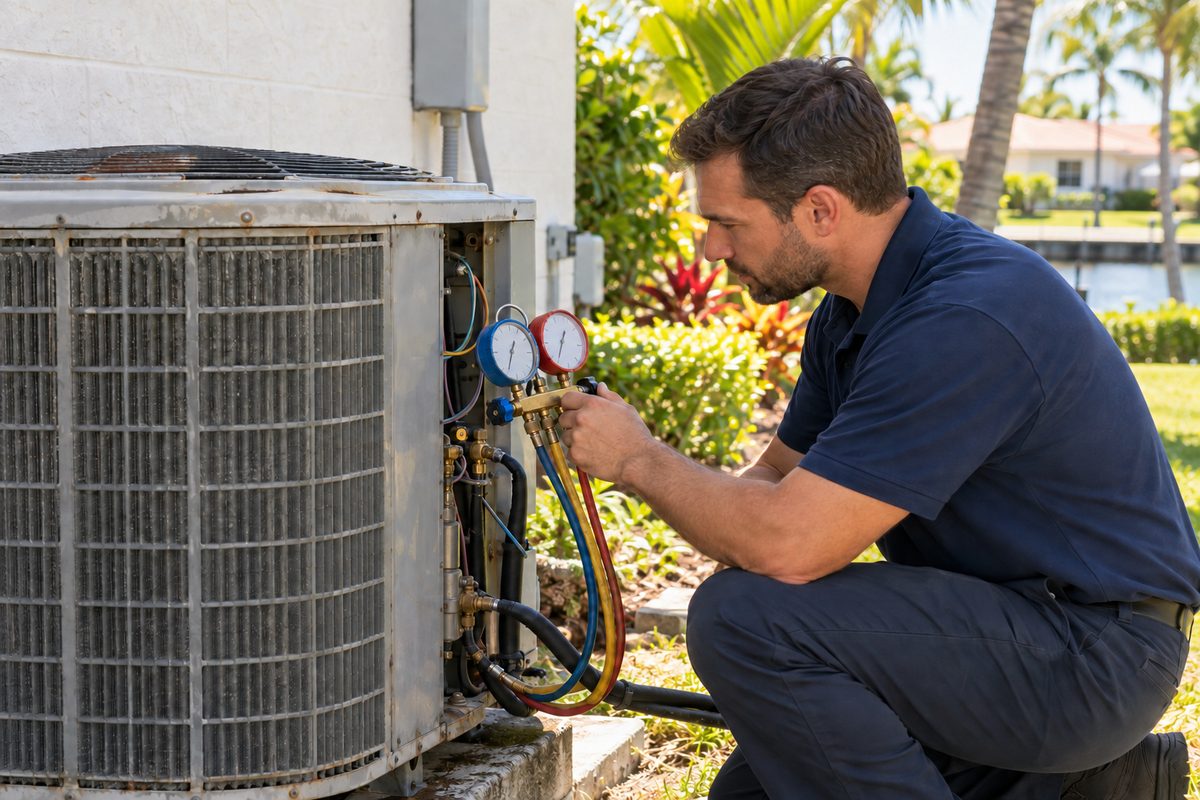
Short answer: R-22, sometimes sold as Freon, is an older refrigerant that has not been produced or imported in the US since 2020. Systems that use it can still run and be repaired, but the only R-22 available comes from existing and recycled stock, so a recharge is expensive. If an R-22 system develops a leak, replacement is usually the better investment.
How to tell if your system uses R-22
- Age. Most systems installed before about 2010 use R-22. Systems installed after that generally use R-410A, and new systems sold since 2025 use newer refrigerants.
- The data plate. The outdoor unit has a label listing the refrigerant type. Look for "R-22" or "HCFC-22".
- Ask. Any licensed technician can confirm it in seconds during a visit.
Why R-22 became so expensive
R-22 damages the ozone layer, so federal rules phased it out over many years and ended new production in 2020. What remains is a shrinking supply, and that pushes the price up every season. A recharge that would be routine on a newer system can turn into a large bill on an R-22 system.
Do you have to replace an R-22 system?
No. There is no requirement to replace a working R-22 system. If it cools well and does not leak, it can keep running. The pressure comes when something goes wrong:
- A leak. Refrigerant does not get used up. If a system needs more, it has a leak, and recharging without fixing the leak means paying for scarce R-22 again later.
- A major part failure. A compressor or coil replacement on a system old enough to use R-22 rarely makes financial sense.
- Age. In coastal Florida, a system from the 2000s is already past a typical lifespan, as our coastal lifespan guide explains.
Be wary of anyone offering to put a different refrigerant into an R-22 system without explaining the tradeoffs. Some replacement refrigerants exist, but they can affect performance, and the decision belongs with a licensed pro who explains it in writing.
Running the numbers
Start with the common rule of thumb from our repair or replace guide: multiply the repair quote by the system's age. Past $5,000, replacement deserves a serious look, and almost every R-22 leak repair on an older system crosses that line. A new system also uses far less electricity, which matters in a Florida summer. Our new AC cost guide covers typical replacement prices, and the quote checklist helps you compare estimates.
If your older system is low on refrigerant or struggling to keep up, we connect Treasure Coast homeowners with independent, licensed and insured contractors for repair and replacement estimates, with no obligation. Start with the quick form.
Trade Winds Air is a referral service, not a contractor. Cost figures above are general published ranges for educational purposes; every real number comes from the licensed, insured contractor who inspects your system.